Canine Unit
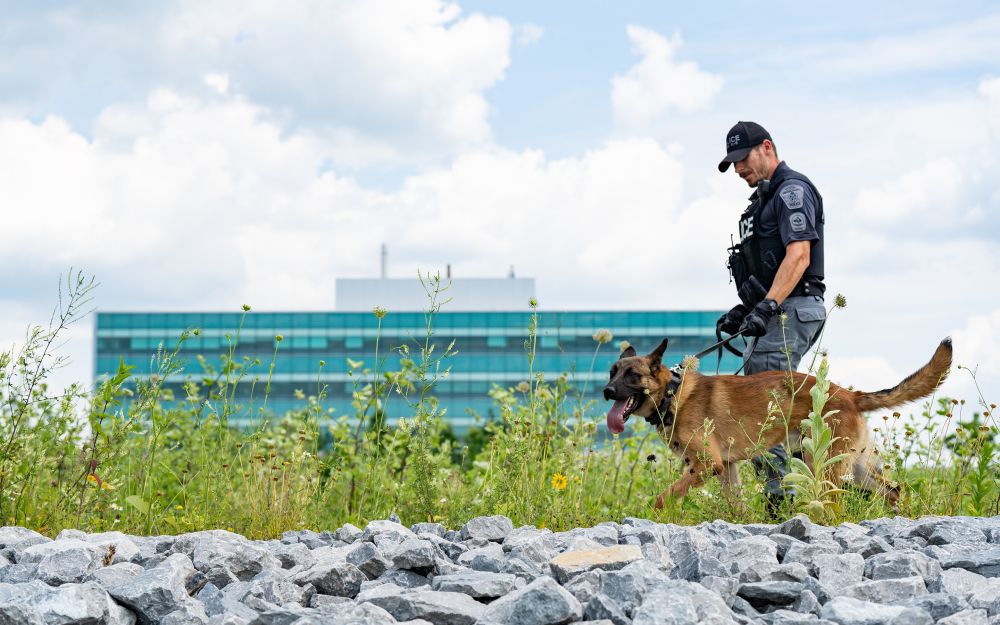
Responsibilities
Canine Unit teams are deployed to:
- Track suspects who have fled on foot
- Search for missing and vulnerable persons
- Detect drugs and evidence
- Assist with building and area searches
- Support high-risk arrests and active incidents
How they help
Police dogs give officers a critical advantage during time-sensitive incidents.
Their ability to follow scent trails, search large areas quickly and locate hidden individuals helps reduce search times and improves safety for both officers and the public. In many cases, the presence of a police dog can lead to quicker, safer resolutions.
The Canine Unit works closely with patrol and specialized units to support operations across the region.
Handlers and dogs
Each police service dog is paired with a handler and together, they complete a 55-day training course.
Training includes:
- Tracking and scent detection
- Criminal apprehension
- Obedience and control
- Building and area searches
Handlers are responsible for the care and ongoing training of their dogs, and the teams share a close bond both on and off duty.
Frequently asked questions
Commonly asked questions about the Canine Unit.
Are police service dogs dangerous?
Police service dogs are highly trained and handled by experienced officers. They are used only when necessary and under strict control.
Often, the presence of a police service dog will lead to quicker, safer apprehensions and limit exposure to dangerous situations for members of the public and frontline officers.
Do police service dogs live with their handlers?
Yes. Police dogs typically live with their handlers, which helps build a strong working relationship and ensures ongoing care.
Do police service dogs find missing people?
Yes. Police service dogs are often used to track missing or vulnerable persons and can follow scent trails over long distances.
How are police service dogs selected?
Police service dogs are trained from birth to be working dogs. Animals are often selected to join the service around their first birthdays, which is where the special bond with their handler begins.
How are police service dogs named?
Most often, police service dogs are named by their handlers. Several police service dogs at York Regional Police, however, were named by members of the public in online polls.
Can I meet a police service dog?
Canine Unit teams often make appearances at public events, including the Police Week Open House event in May.