Ice Safety
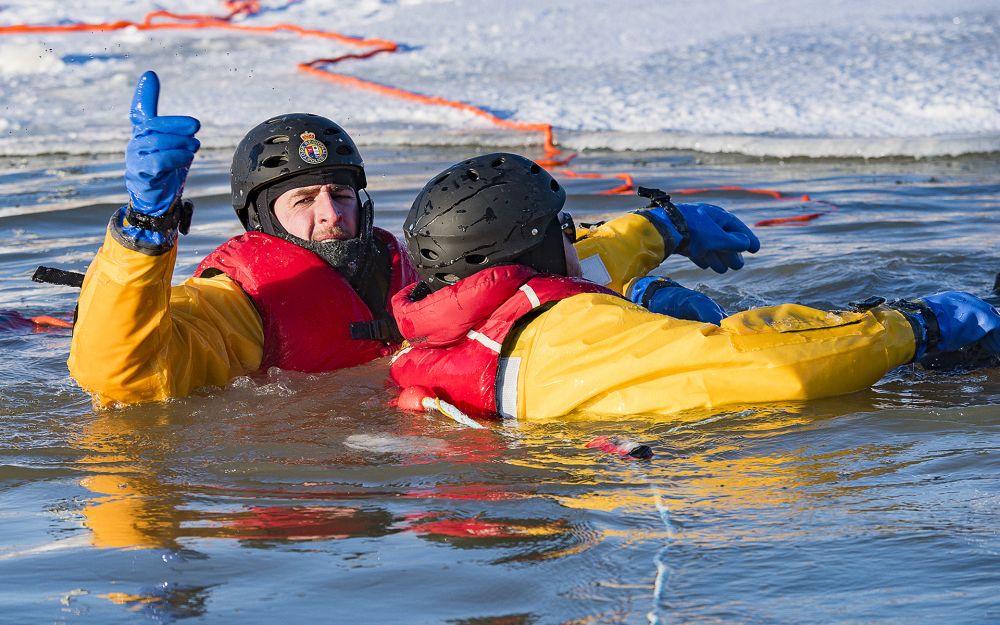
No ice is safe ice
When winter arrives, many people in our region head out to skate, fish, or ride snowmobiles on frozen lakes and rivers. But police respond every year to emergencies caused by people falling through the ice — and some of these incidents have tragic consequences.
Before you venture onto ice, understand the risks and take steps to stay safe.
Check Ice Conditions
Know the ice before you go
Recent weather changes — warm days, rain, or snow — can weaken ice.
Watch for weak spots
Gray, dark, or porous areas may be soft. Blue, hard ice is generally the strongest.
Be cautious of snow ice
White, opaque ice formed by frozen wet snow is about half as strong as solid blue ice.
Avoid hazards
Stay away from pressure cracks, open water, and floating ice sections — these are signs the ice is unsafe.
Be Prepared
Tell someone your plan
Share where you’ll be, who you’re with, and when you expect to return.
Wear proper gear
Dress for the cold and wear a certified flotation device.
Bring a charged cellphone
Keep it in a waterproof bag in case of emergency.
What to do if you fall through the ice
Call for help immediately
Alert first responders or nearby bystanders.
Don’t climb out where you fell in
The ice there is weak.
Float on your stomach
Use the air trapped in your clothing to stay afloat.
Pull yourself onto solid ice
Reach forward onto the broken ice without pushing down, and kick your legs to lift your torso.
Move carefully
Once on the ice, crawl or roll away from the open water with arms and legs spread to distribute weight. Do not stand. Look for shore and move steadily in the right direction.


