Body-Worn Cameras
Purpose of the Program
The purpose of the Body-Worn Camera program is to:
Enhance public and member safety
Deliver increased accuracy and quality of evidence, supporting effective and efficient investigations and prosecutions
Support fair and impartial policing, contribute to increased transparency and help foster trust between our community, internal colleagues and partner agencies
Contribute to enhancing accountability for YRP members
Contribute to service effectiveness and member wellness through supporting enhanced training and debriefs
Support policy and procedure compliance, performance management and supervision
Deliver a fair and timely response to allegations of police misconduct and the resolution of complaints
The York Regional Police Body-Worn Camera Program is anchored in the guiding principles outlined by the Information and Privacy Commissioner of Ontario, under guidance set out in the Model Governance Framework for Police Body-Worn Camera Programs in Ontario.
How is footage stored and protected?
Body-worn camera footage is stored in a secure digital evidence management system with safeguards to protect its security, integrity, and confidentiality.
Access to recordings is restricted to authorized personnel for lawful purposes such as investigation, evidence management, disclosure, audit, training, or complaint resolution, as permitted by policy and law.
How is privacy protected?
Privacy is a key consideration in the use of body-worn cameras.
Privacy protections may include:
- limits on when recording occurs;
- secure storage of footage;
- restricted access to recordings;
- audit logs showing access history;
- retention rules; and
- redaction of personal information where required before disclosure.
Is facial recognition used with body-worn camera footage?
Body-worn camera footage is not used as a facial recognition tool.
How long is footage kept?
Retention periods depend on the nature of the recording and applicable records retention schedules, legal requirements, and evidentiary needs.
Recordings are retained in accordance with the Service’s records retention schedule and may be kept longer where required for an investigation, court proceeding, complaint, or other lawful purpose.
Can I request body-worn camera footage?
In some circumstances, individuals may request access to recordings that contain their own personal information, subject to applicable legislation and limits on disclosure.
Requests for access to records can be made through York Regional Police’s Freedom of Information process:
Freedom of Information Requests: https://www.yrp.ca/reports-and-services/request-something/freedom-information-requests
Access may be restricted or denied where:
- the recording contains another person’s personal information;
- the matter is under investigation;
- the matter is before the courts;
- disclosure is otherwise prohibited by law; or
- release would affect privacy, safety, or the integrity of an investigation.
Will footage be released publicly?
Not usually. Body-worn camera footage is not generally released publicly unless there is lawful authority to do so.
Any release must comply with applicable privacy, access, and evidentiary requirements.
What happens if an officer does not activate the camera when required?
Officers are expected to comply with body-worn camera policy. If a camera is not activated when required, the matter may be reviewed through supervisory, investigative, or complaint processes, depending on the circumstances.
If you would like to file a compliment or complaint, please visit:
Compliments and Complaints: https://www.yrp.ca/contact-us#complaintscompliments
Guiding Principles
The York Regional Police Body-Worn Camera Program is committed to using body-worn cameras in a manner that is:
- necessary and proportionate to the purposes of the program
- transparent and accountable to the public;
- upholds the integrity of the criminal justice system and the administration of justice;
- protects individuals' rights to information and privacy
- fair and equitable in its application; and
- grounded in respect for the inherent worth and dignity of every person.
Frequently asked questions
What is a body-worn camera?
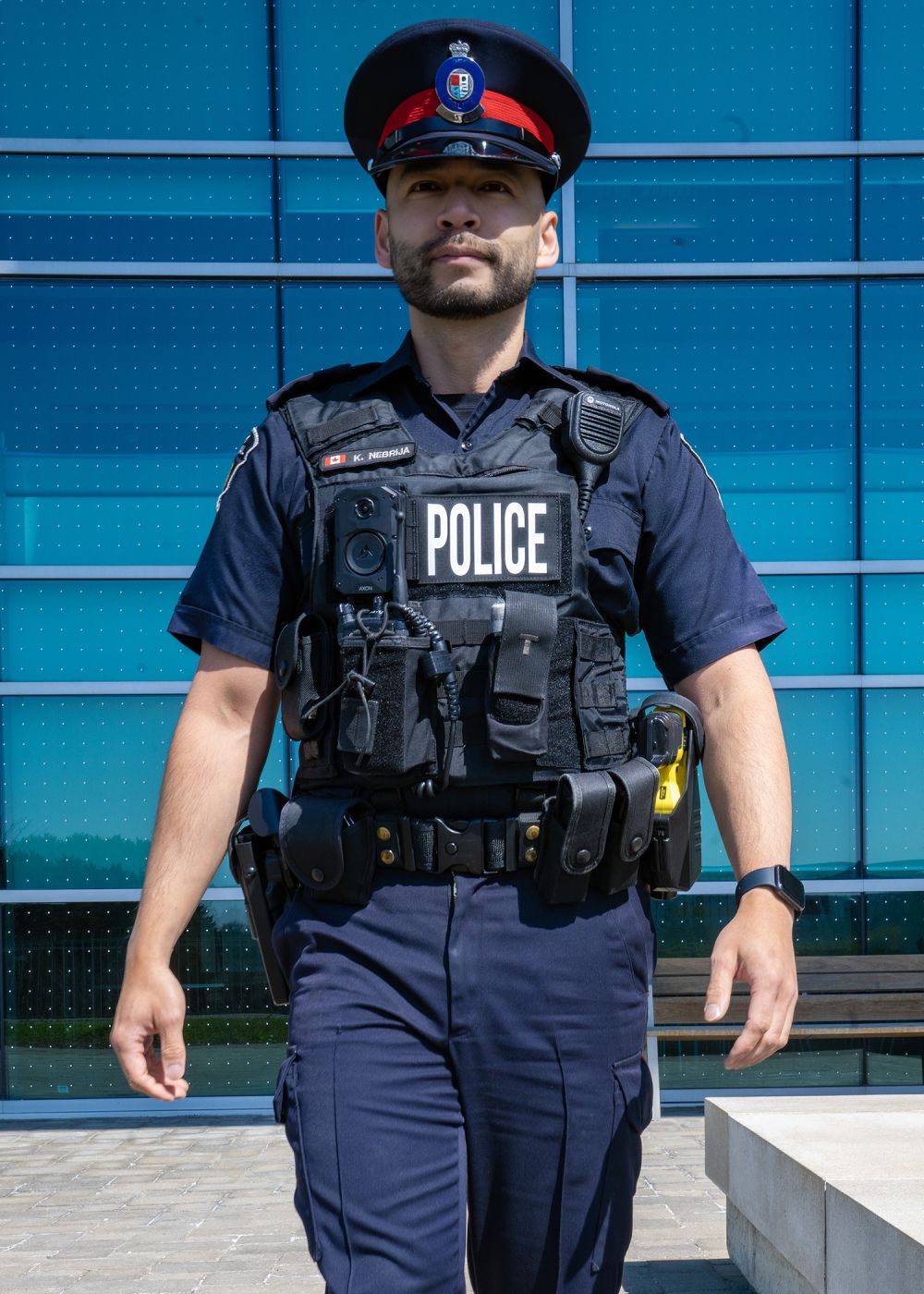
A body-worn camera is a small video and audio recording device worn on an officer’s uniform. It is used to record certain interactions between police and members of the public.
Are body-worn cameras always recording?
No. Body-worn cameras are not intended to record continuously throughout an officer’s entire shift.
Officers are required to activate their cameras in specific circumstances, in accordance with service policy and legal requirements.
When a body-worn camera is recording, the tri-colour LED light will be red. If the light is green, the camera is in standby mode.
When do officers turn their body-worn cameras on?
In general, officers are expected to activate their body-worn cameras during investigative or enforcement-related interactions.
Depending on the circumstances and service policy, this may include:
- at or before certain calls for service;
- traffic stops;
- arrests or detentions;
- interactions that are becoming confrontational;
- use-of-force situations;
- witness or suspect interviews; and
- other situations where recording is required by policy.
When do officers turn their body-worn cameras off?
Officers are expected to stop recording when the interaction or investigation has concluded, or when recording is no longer required or appropriate under policy.
Privacy considerations, legal restrictions, or operational factors may also affect whether recording continues.
How will I know if I am being recorded?
Body-worn cameras are visible on the officer’s uniform and are worn on the officer’s ballistic vest. Officers will advise individuals that recording is taking place as soon as it is safe and practical to do so.
When the camera is recording, the tri-colour LED light on the front will be red. When the light on the camera is green, it is in standby mode.
Can I ask an officer to stop recording?
Yes. You may ask an officer to stop recording. The officer will consider the request in accordance with service policy, the law, and the circumstances of the interaction.
In some situations, recording may need to continue for investigative, evidentiary, accountability, or safety reasons.
Do officers record inside homes or other private places?
Officers may record in private settings when lawfully carrying out their duties and when recording is permitted or required by policy.
Because these locations may involve heightened privacy concerns, officers must carefully consider privacy interests and legal requirements when deciding whether recording should occur or continue.
Are there situations where officers may not record?
Yes. There may be circumstances where recording is not appropriate, not permitted, or not possible.
Examples may include:
- situations involving heightened privacy concerns;
- legal restrictions;
- sensitive victim or witness interactions;
- technical issues; or
- situations where safety would be compromised.
Specific exceptions are governed by service policy.
Does the camera capture everything?
No. Body-worn camera footage captures one perspective only.
It may not capture:
- everything the officer sees or hears;
- activity outside the camera’s field of view;
- all environmental conditions;
- obstructed views; or
- the full context of an incident.
Footage should be considered together with all other available information.


