Boating Safety
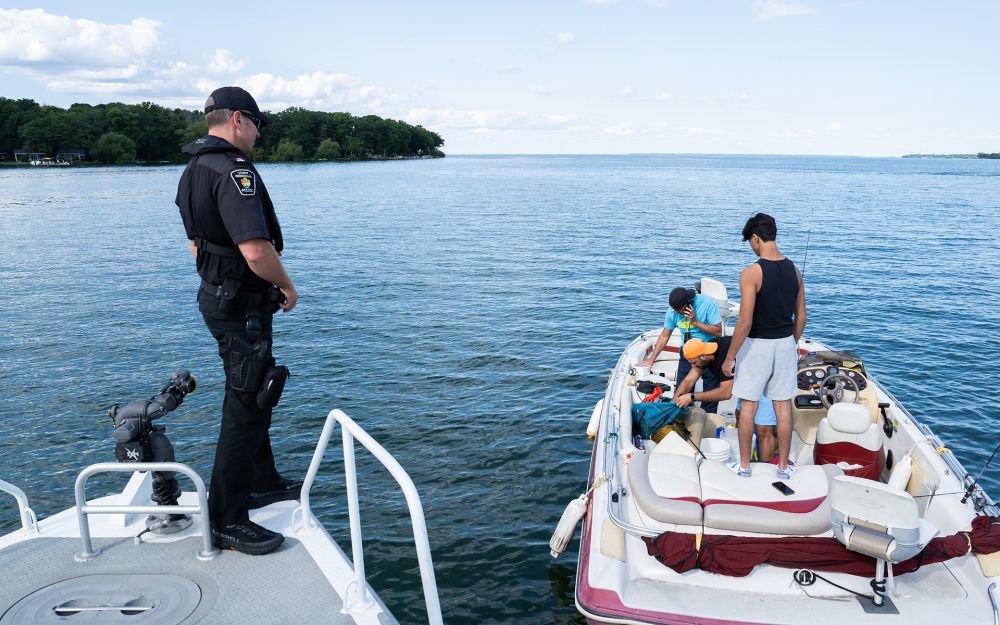
Stay safe while enjoying the water
Every summer, thousands of people enjoy boating on Lake Simcoe and other waterways across York Region. While it's a fun activity, boating can become dangerous for those that don't take safety seriously.
Follow these guidelines to make sure you're staying safe the next time you head out on the water.
Impaired boating and the law
Boating impaired is dangerous and illegal. Just like on the road, safety is a shared responsibility for operators on the water, too. Drugs and alcohol can lead to impaired judgment and ability to operate a boat, especially when combined with sun, wind, and water conditions.
Penalties
The same laws that apply to drivers on the road apply to boaters. Impaired driving, on water or land, carries serious consequences as soon as someone is charged with an offence. Penalties for first-time offenders include:
- License suspension for any motorized vehicle, including cars and motorcycles
- Vehicle impoundment
- $550 fine
- Possible imprisonment
Penalties become more severe for repeat offenders. Learn more about all penalties for impaired driving in Ontario.
Safety equipment
Personal flotation device
By law, everyone on board a boat must have access to a Canadian-approved lifejacket or personal flotation device (PFD). This includes human-powered vessels, like canoes and kayaks.
See the Transport Canada guidelines for selecting an approved lifejacket or PFD.
Other equipment
Motorized vehicles up to six metres in length also require:
- One buoyant heaving line at least 15 metres in length
- One manual propelling device or one anchor and at least 15 metres of cable, rope or chain in any combination
- One bailer or manual bilge pump
- One watertight flashlight
- One sound-signalling device or appliance
- One 5BC fire extinguisher if equipped with an inboard engine, a fixed fuel tank of any size, or a fuel-burning cooking, heating or refrigerating appliance
- Navigation lights (if a boat is operated after sunset, before sunrise or in periods of restricted visibility)
Larger boats and other vessels may have different requirements, by law. See the Transport Canada Safe Boating Guide or Canada's boating safety webpage for comprehensive requirements and pre-departure checklists.
In addition to all the safety equipment required by law, there are other actions boaters should take before heading out on the water:
Before Departing
- Understand all laws and regulations, consider taking a boating safety course
- Complete an inspection of your boat. Ensure there are no leaks or damage
- Tell someone about your plans, and where you will be going
- Bring good sunglasses, sunscreen, and appropriate clothing for any possible weather conditions
- Ensure you have a fully-charged cellphone and store it in a waterproof container
- Keep extra fuel on hand
While on the Water
- You are responsible for your own safety and that of others on the boat and out on the waterways.
- Operate your boat at a safe speed, as you may have to stop or turn suddenly to avoid a collision
- Be aware of changing weather conditions and drive with extreme caution after dark, with lights on
- Adjust to changing visibility conditions including fog, mist, rain, darkness, wind, water conditions and currents
- Be alert and look out for any navigational hazards, like rocks and tree stumps
- Be courteous of others using the waterways and obey all boating rules
- Keep an eye out for swimmers and other boaters, and always have a spotter for those water-skiers and tube riders


