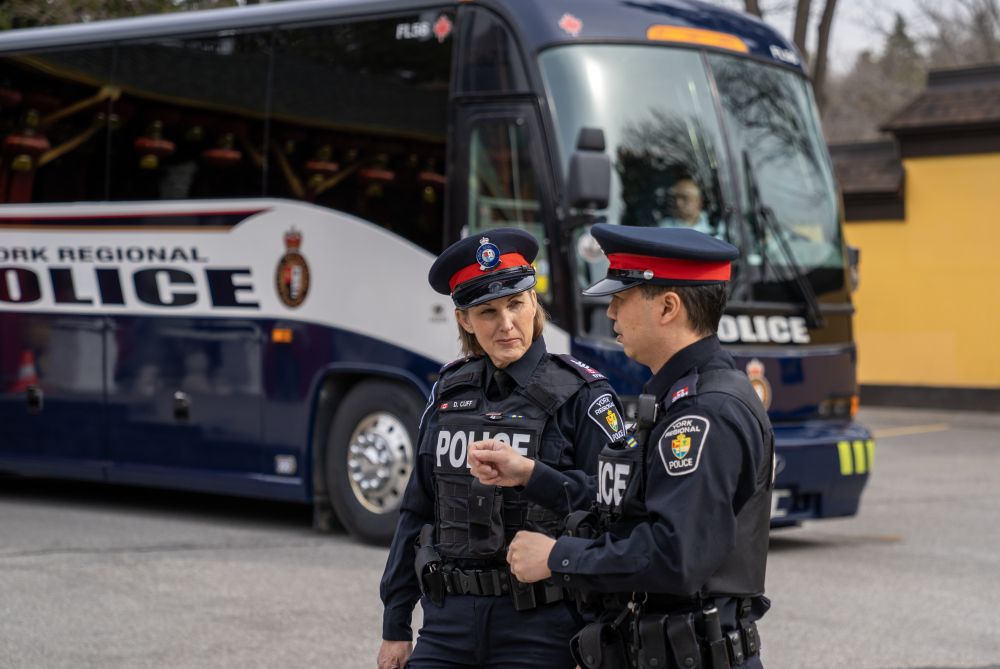
CIRCLE York Mobile Support Vehicle
- C Community Safety and Well-Being
- I Integrated
- R Response
- C Connecting
- L Local
- E Engagement
CIRCLE YORK delivers coordinated, community-based support directly to individuals across York Region by bringing police, paramedic, and outreach services together. Through a preventative, client-centred, trauma-informed approach, the Unit improves access to health, mental health, addictions, housing, and social supports; promotes safety and stability for individuals and the community; and helps reduce avoidable reliance on emergency services.
Summary of Services Offered
CIRCLE York Mobile Support Vehicle operates as an integrated mobile support hub, bringing York Region Paramedic Services, social workers, plain-clothes York Regional Police officers, and York Region Outreach together to provide timely, on-the-spot assistance to community members with complex or unmet needs.
Services include:
Outreach and engagement
Proactive outreach and client-centered engagement in community settings, for individuals experiencing or at risk of homelessness.
Housing and social supports
Assistance accessing housing, shelter, income supports, identification, food and essential supplies, and other community resources.
Mental health and addictions support
Needs assessments, crisis planning, harm reduction, referrals, and short-term non-crisis follow-up.
Health and clinical care
Health assessments, chronic disease monitoring, medication support, wound care, basic clinical interventions, and continuity-of-care coordination.
System navigation and advocacy
Support navigating health, social, housing, mental health, addictions, and emergency-service systems, including voluntary referrals and connection to existing supports.
Community-based stabilization
Engagement, service coordination, risk mitigation, stabilization planning, and support for cold- and hot-weather response.
Collaborative care coordination
Coordinated planning with hospitals, primary care providers, community agencies, mental health and addictions services, and other partners to identify unmet needs and improve outcomes.
Emergency-service diversion
Targeted support intended to stabilize individuals in the community, improve access to appropriate care, and reduce avoidable 911 calls and emergency department visits.
Frequently Asked Questions
Who is the vehicle for?
The CIRCLE York Mobile Support Vehicle is for individuals in the community who are facing challenges accessing health, mental-health, addictions, shelter and/or housing, or social services. The vehicle does not respond to emergency calls for service.
Who operates the vehicle?
It is an integrated service delivery involving York Region Outreach, York Regional Police and York Region Paramedic Services.
Where and when will the vehicle be available?
CIRCLE YORK Mobile Support Vehicle will attend various locations throughout York Region, bringing services directly into the community at pre-determined times that will vary based on the needs of the community.
Do I need an appointment?
No appointment needed.
Is the service free?
Yes, the services are free.
What kind of care can I receive on the vehicle?
Depending on the person's needs, CIRCLE YORK Mobile Support Vehicle can provide or connect people with health care, mental-health support, addictions support, housing assistance, and social services.
Can I get connected to a doctor or other health services?
CIRCLE YORK staff can help with service navigation and referrals to supports which may include a doctor or other health services.
Is my information kept confidential?
CIRCLE YORK Mobile Support Vehicle has a private consultation space. Our teams adhere to PHIPA and MFIPPA guidelines. The only time we would disclose information is with consent, if there is a risk of safety to self, risk to someone else, or risk to a minor.
Can I use the service if I don't have identification?
Yes, community members can use the services on the vehicle without identification.
Can I use the service if I don't have a health card or permanent address?
Yes, community members can use the service without a health card or permanent address.
Can I receive prescriptions during my visit/assessment with paramedics?
No, Paramedics cannot prescribe medications. Prescriptions can only be provided by an authorized primary care provider, such as a physician or nurse practitioner, following a health assessment and clinical evaluation.
Can I access a Naloxone Kit if needed?
Yes. A paramedic can provide naloxone and other harm reduction supplies when appropriate. They will also provide education and guidance on safe use, storage, and overdose prevention to help ensure these resources are used effectively and safely.
Can OW/ODSP documentation be completed by Regional staff on the vehicle?
Yes. Outreach Workers can help facilitate applications, document submissions and follow ups with individuals and their social assistance case workers with both OW and ODSP.


